
Scientific membership organisation cut composition time for complex journals by over 50% with Typefi.
The Federation of Animal Science Societies (FASS) was formed in 1998 by three member societies—the American Dairy Science Association, the American Society of Animal Science, and the Poultry Science Association—with a shared vision of pursuing scientific and educational good in animal agriculture.
Today, FASS strengthens the common interests of member societies through a unified science-based voice that supports animal agriculture, animal products, and food systems globally through effective and efficient management services.
FASS facilitates the dissemination of scientific and technical information to its 10,000+ member professionals through scientific meetings and several monthly, bi-monthly and quarterly peer-reviewed journals which are published in print and online.
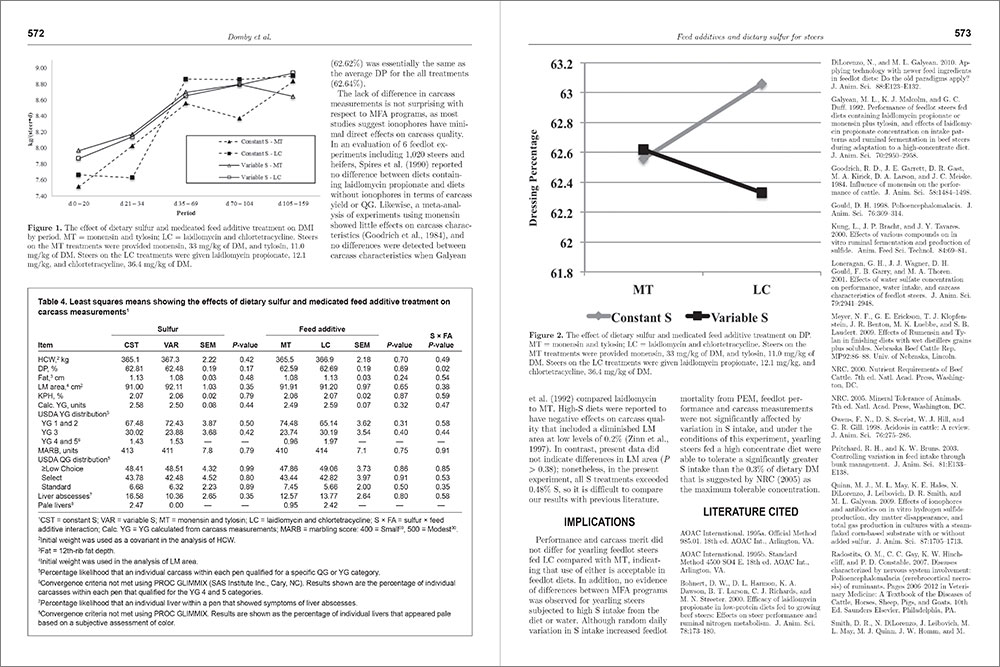
The FASS publications department has a combined editorial experience totalling more than 80 years and composition experience of more than 40 years, and publishes more than 14,000 journal pages annually.
The challenge: Overcoming lengthy, laborious and costly publishing workflows
FASS’s richly-formatted scientific journals—which typically contain linked references, in-text citations and complex scientific formulae—historically relied on tedious, highly manual editorial and publishing workflows.
One of the most time-consuming aspects of the publishing process involved outsourcing to contracted developers, who added proprietary code for mathematical and scientific notation into each manuscript.
The manuscripts were then returned to FASS for composition using a proprietary publishing system, only to be sent out again for proofing. Once the authors’ changes were returned, edits were added manually before the final print-ready files could be produced.
Only then could the journals be paginated and printed, and the information prepared for online presentation.
On top of all that, the online host for several FASS journals required that print-ready files be sent offshore for conversion to HTML, further adding to publication costs.
It was challenging and stressful to deliver accurate, complex information in a timely fashion using these workflows, so FASS began exploring alternatives.
The solution: Automated composition of complex content
Following a review of its systems, FASS decided to replace its cumbersome publishing system and complex workflow with Typefi Workgroup—Typefi’s on-premises multi-user enterprise platform—and Inera eXtyles, an industry-standard XML editing tool for Microsoft Word.
In the new workflow, FASS’s technical editor edits content in Microsoft Word, using the Typefi Writer add-in along with eXtyles to prepare the document for automatic composition while ensuring compliance with the National Information Standards Organization (NISO) XML standards for journal publishing (JATS).
With a single click, the editor sends the document to Typefi, which returns a completed design proof for review in just minutes.
The new workflow also automates the publication of journal cross-references with links to the PubMed Central and Crossref databases, and seamlessly integrates mathematical and scientific editing tools.
For journals containing heavy mathematical content, FASS uses Wiris MathType, an interactive equation editor that enables the creation of mathematical notation for desktop publishing.
Equations are exported as images from MathType and automatically integrated into the composed article during the Typefi automated publishing process.
This has completely eliminated the time-consuming process of coding each manuscript prior to composition and, therefore, the need to engage external contractors.
All journal content is managed in a single content management system, with automated processes to handle metadata and to deliver print-ready PDFs and XML to FASS’s printers and online hosts.
Unfortunately, eXtyles reached end-of-support in August 2026, leaving FASS and many other scientific publishers without an indispensable editorial tool.
In response, Typefi launched Typefi Orion, a seamless replacement for eXtyles. FASS is currently implementing Orion, which will enable their team to continue a nearly identical workflow that’s even faster and smoother.
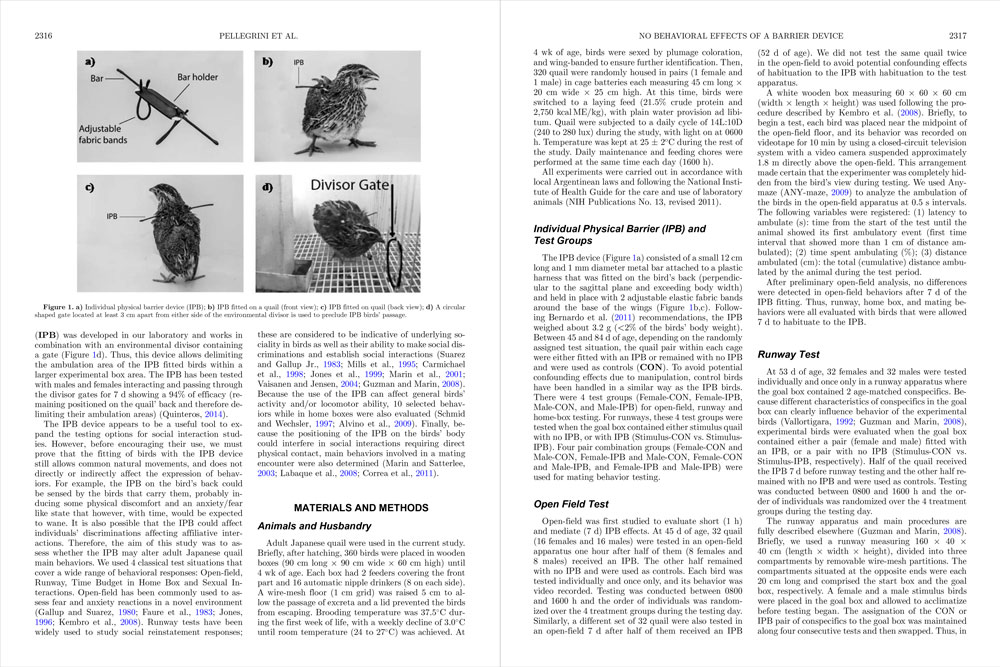
Slashing production time while maintaining accuracy
“The time required for implementation of and training in the Typefi system was greatly reduced compared with that for our previous composition systems,” said Louise Adam, Production Manager at FASS.
“Typefi combined our need for highly automated batch pagination with the ease of use of Adobe InDesign and replaced a labour-intensive, manual typecoding process.”
FASS can now publish a journal 2–3 weeks faster on average using Typefi. Additionally, FASS has been able to increase the number of pages published per journal without adding more composition staff.
“Increased automation and a more streamlined workflow with Typefi at the core has enabled us to cut journal composition time by more than half,” Louise said.
“The cost and time benefits to get an accurate proof to our authors on time have been enormous.”
Ready to take the first step towards revolutionising your publishing?
We’ll work with you to understand the publishing challenges you’re facing and determine which Typefi solution best suits your budget and production requirements. Start by telling us a bit about your publishing needs and we’ll be in touch!